
The vital link between patients and their health
Getting the most out of chronic treatment with courier pharmacy expertise
Monday, 28 September 2026. For someone who relies on chronic medication, a repeat prescription is only one part of staying on treatment. The medicine must be checked, dispensed and transported safely to reach the person when needed, and the patient must know exactly how to use it.
This journey involves people the patient may never meet. At Medipost Pharmacy’s head office in Gezina, Pretoria, pharmacist Lesiba Ramokgola focuses on safe medicine use and patient advice. Her colleague Lebogang Modiba, CCMDD Manager: Order Processing, helps get medicine to collection points for public healthcare patients through the Central Chronic Medicines Dispensing and Distribution (CCMDD) programme, run in partnership with the Department of Health across several provinces.
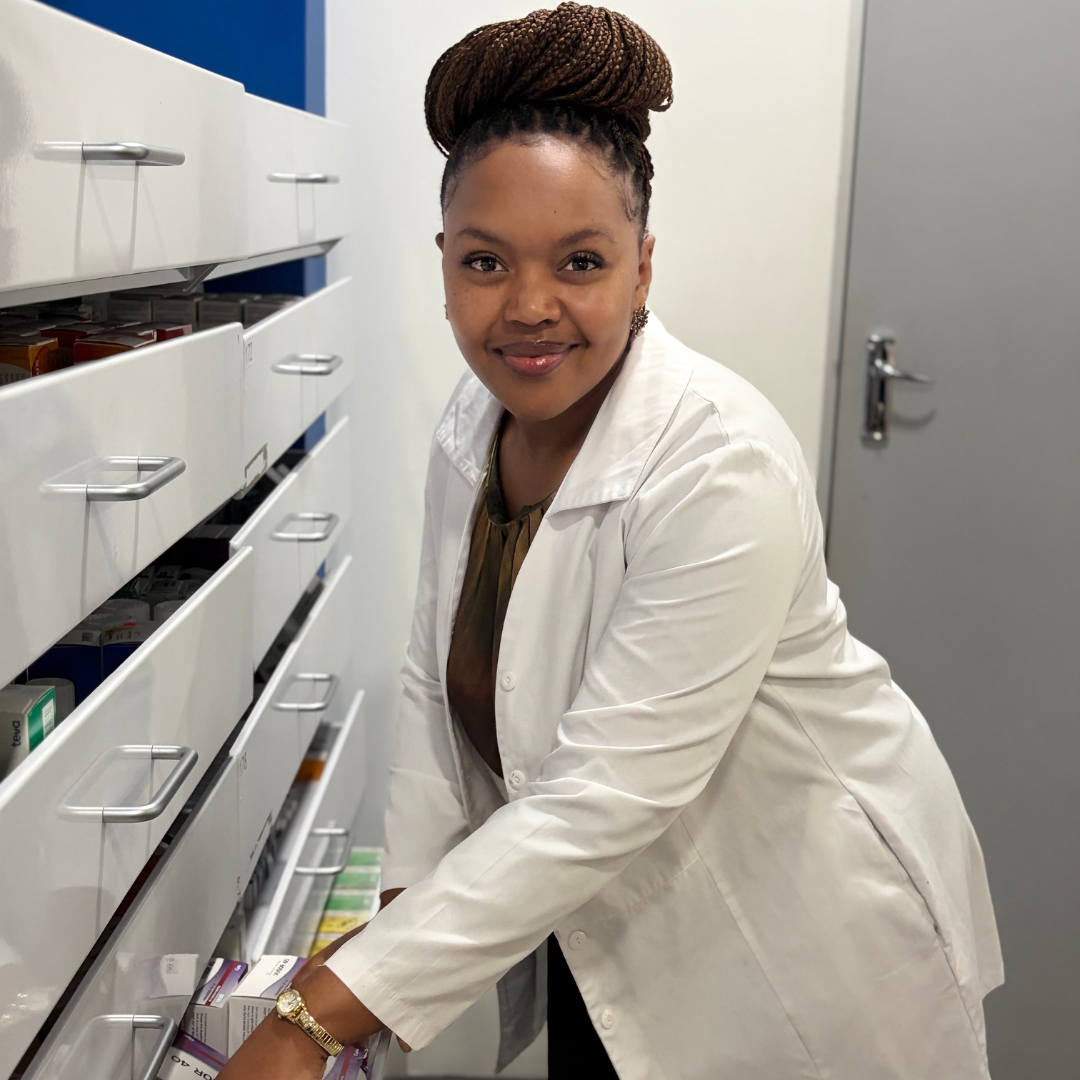
Pharmacist: Lesiba Ramokgola

CCMDD Manager – Order Processing: Lebogang Modiba
Before medicine leaves the pharmacy
A pharmacist’s work includes checking prescriptions, looking for potential interactions and helping patients understand their treatment. This is particularly important when someone takes several medicines or has questions about a new prescription or possible side effects.
For Ramokgola, a central part of the role is getting “the right medication at the correct dose to the right patient”. Patients also need to be told exactly how to take their medicine and when to ask for help.
“Pharmacists have studied medications and their active ingredients for many years. They are well equipped to provide healthcare advice to the public and know what important things to look out for,” she says.
As an established national courier pharmacy, Medipost’s pharmacy professionals provide clinical advice to patients over the phone, reducing the need to visit a pharmacy, and also dispatch medicines for delivery to patients’ addresses or to collection points for easier access.
Getting medicine closer to patients
For people on long-term treatment, collecting medicine can take time and money. Convenient collection points make it easier for eligible patients who are stable on their treatment to receive repeat medicine without an unnecessary visit to a healthcare facility. These patients may be managing conditions such as high blood pressure, diabetes or asthma.
“The pharmacist’s role has moved from simply asking patients, ‘What medication do you need?’ to asking, ‘How can I help you achieve better health outcomes?’” says Modiba.
Modiba is a vital link in the pharmacy service. Her work within Medipost’s CCMDD team involves paying attention to the processes behind each order so that it reaches the patient’s chosen collection point.
“Within the CCMDD programme, this evolution of pharmacy in service of patients is demonstrated by our role in decentralising chronic healthcare services. We help bring medication closer to patients with stable chronic conditions through convenient collection points, reducing travel costs and helping to alleviate long queues at public healthcare facilities,” she says.
Medication safety
Pharmacists have an essential role in promoting safe medication use. “A medicine that is safe for one person may be unsuitable for another. Sharing prescription medicine, taking someone else’s treatment or choosing an over-the-counter product without medical consultation regarding possible interactions with other medicines or health conditions can cause harm,” Ramokgola warns.
Modiba cautions that comorbidities, allergies and other chronic conditions can also influence the safety of medication.
Ramokgola encourages patients to speak to a pharmacist if they are unsure about a dose or notice possible side effects, and before adding another medicine to their treatment.
Three simple steps patients can take
- Check prescription renewal dates. Ask your pharmacist when a repeat prescription must be renewed so there is time to arrange the next supply.
- Keep your details current. Tell the pharmacy if your phone number, delivery address or collection point changes.
- Check your medicine. Every time, make sure it is intended for you. If an item is missing, looks different or comes with instructions you do not understand, contact a pharmacist before taking it.
Being able to ask those questions in a familiar language matters. Medipost pharmacists and pharmacy assistants can communicate with patients in South Africa’s 11 spoken official languages, helping them understand their treatment and raise concerns. To register for medication delivery anywhere in South Africa, simply WhatsApp Medipost Pharmacy on 012 426 4655.
From checking the prescription to delivering medicine to the patient and answering questions about its use, each step, guided by pharmacy expertise, helps make ongoing treatment safer and easier to manage, supporting better adherence and clinical outcomes.
Ends.
For media enquiries, please contact MNA at the contact details listed below:
|
Issued by: |
MNA on behalf of Medipost Pharmacy |
|
For media enquiries contact: |
Martina Nicholson, Meggan Saville, Estene Lotriet-Vorster or Natasha Burger |
|
Telephone: |
011 469 3016 |
|
Email: |